How an AI Receptionist Recovers Revenue Fast

AI Receptionist for Small Business: Recover Missed Calls
A caller dials your number on a Tuesday afternoon. Your front desk is buried, the line rings out, and within ninety seconds they've called the next provider on their list. That single unanswered call is the gap an AI receptionist for small business is built to close—not with futuristic gimmicks, but with a simple revenue-recovery workflow: missed call, immediate text or voice answer, a few questions to understand what the caller needs, then a booked appointment or a clean handoff to your team. The technology is less interesting than the math. A missed call is usually a lost lead, and the fastest response tends to win the booking.
How an AI receptionist for small business recovers revenue fast
The problem is easy to state and expensive to ignore. Missed calls frequently represent lost leads, and the damage is sharpest in local services and time-sensitive inquiries where the caller has an urgent need and a short list of alternatives (Discovery Dot, 2024). When nobody picks up, most callers don't leave a voicemail and wait. They move on.
The operational goal is to replace "voicemail and hope" with a concrete next step. Instead of an unanswered ring and a vague promise to call back someday, the caller gets an immediate action: a booking, a quick qualification, or a warm callback task assigned to a real person (Discovery Dot, 2024). Nothing is left to chance, and nothing depends on someone remembering to check messages at 6 p.m.
There are three implementation patterns the research consistently supports, and you don't need a technical background to picture any of them. The first is SMS-first recovery, where a missed call triggers an instant text. The second is real-time voice answering, where an AI agent picks up live. The third is a hybrid handoff, where the system takes the first touch and routes higher-value or complex calls to your staff (Discovery Dot, 2024; RingCentral, 2024). Most businesses end up with some blend of the three.
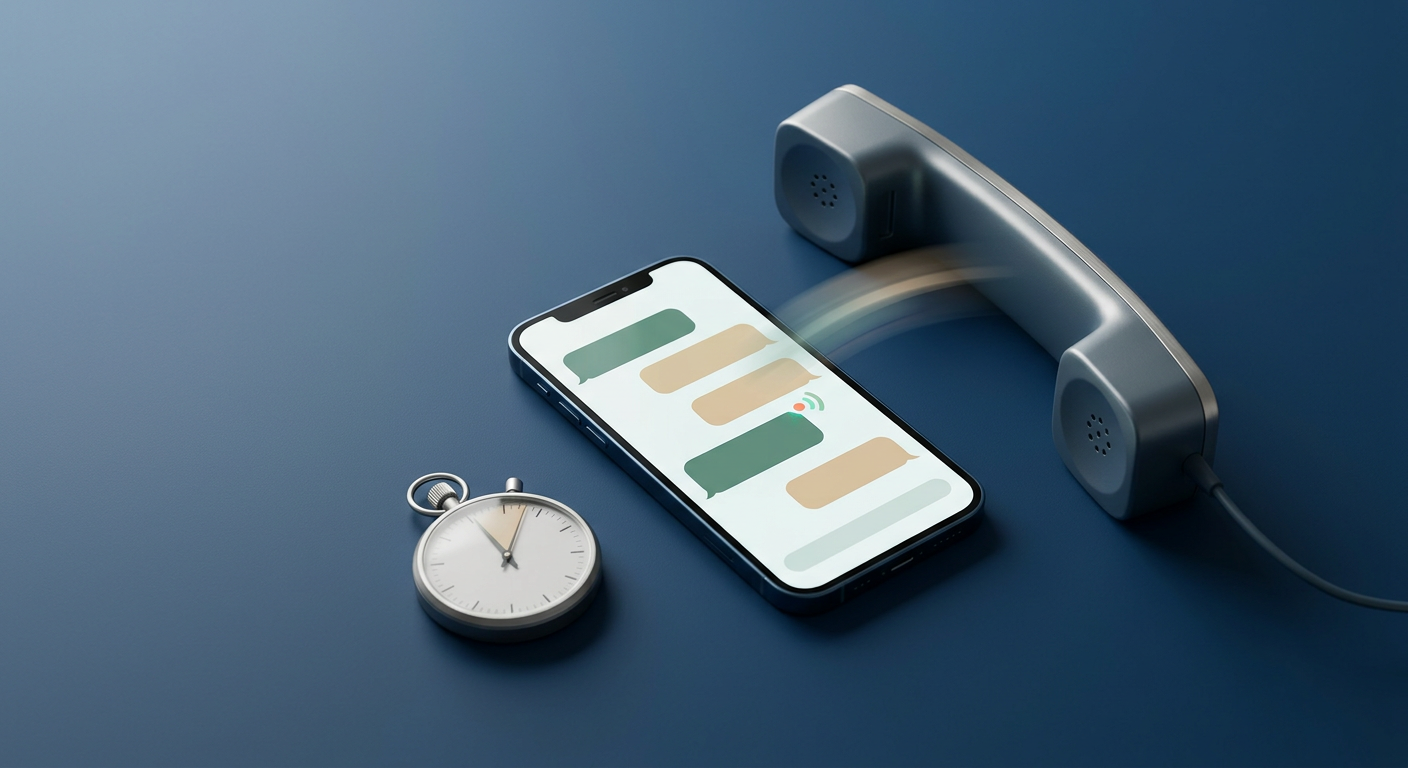
The simple workflow: missed call → next step in seconds
Picture the sequence. The phone rings, nobody answers, and the system detects the missed call almost immediately. A text-back fires, or an AI voice agent answers in real time. It asks a couple of short questions to understand intent—what the caller needs, how urgent it is, whether they're a new or returning customer. Then it either schedules the appointment directly into your calendar or routes the lead to the right person for follow-up (Numa, 2024).
Speed is the whole point. The sources that describe these systems consistently position instant or under-90-second follow-up as the practical standard for recovery (Voksha, 2024). The faster the reply, the better your odds of keeping the caller before they reach a competitor.
What happens when nobody answers—and why "instant" matters
Here's the behavior every operator has seen but rarely measures. A caller with an immediate need hits voicemail, hangs up, and dials the next name on the search results. In local services, where urgency runs high, this happens fast and quietly. You never see the lead because the lead never became a conversation (MyAIFrontDesk, 2024; Numa, 2024).
Response speed changes the outcome more than almost any other variable. The longer the delay between the missed call and your follow-up, the lower the chance the caller books with you instead of someone else. That decay is steepest after hours, when the caller has already accepted that they're reaching out to whoever responds first. A reply that lands in seconds keeps you in the running. A reply that lands the next morning often arrives after the appointment is already booked elsewhere (MyAIFrontDesk, 2024).
This is why the research frames immediate capture as the mechanism, not the novelty. The value isn't that an AI answered the phone. The value is that the lead was intercepted at the exact moment it would otherwise have leaked away (Discovery Dot, 2024). The system's job is to convert a near-miss into a captured conversation before the caller's attention moves on.
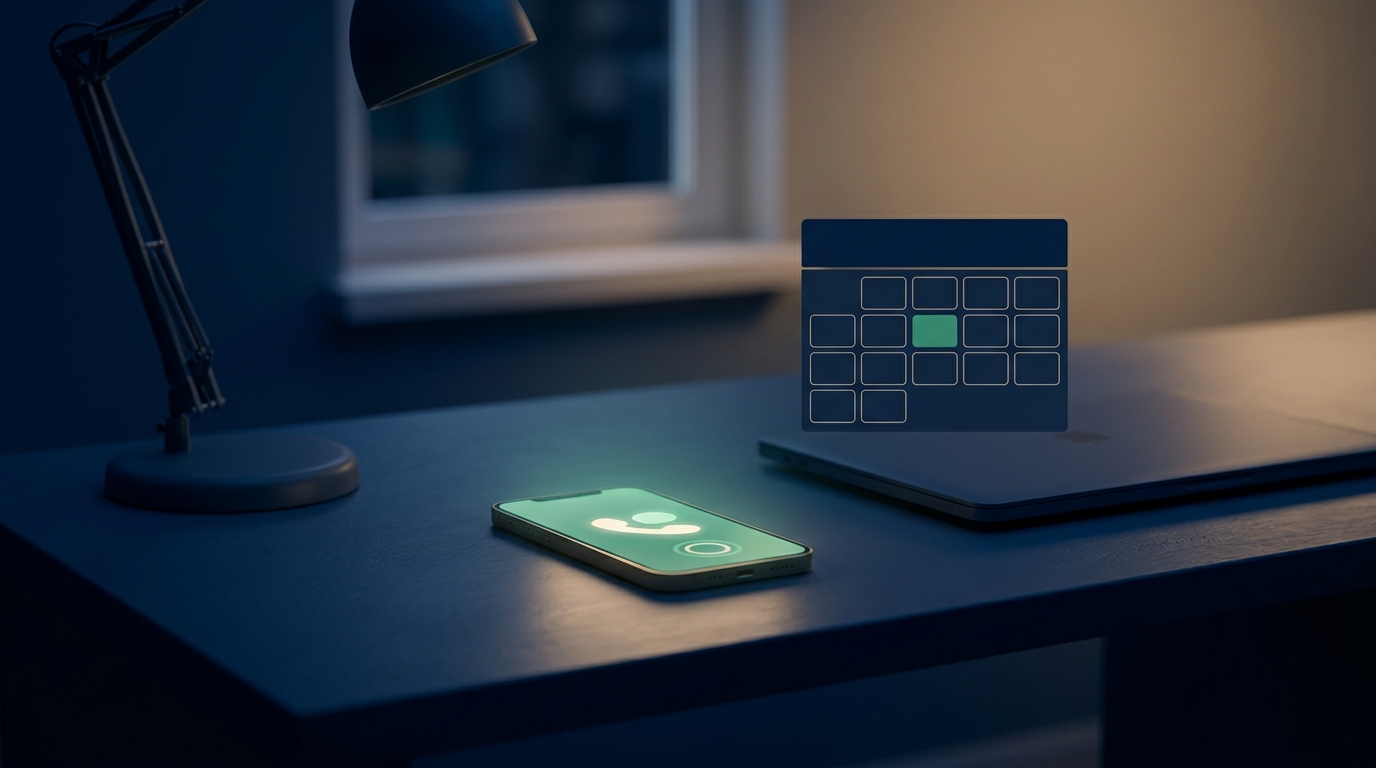
After-hours recovery: can an AI receptionist handle it?
Yes—and after-hours is where the workflow earns its keep. The entire premise of AI missed-call recovery is always-on coverage, so a call at 9 p.m. gets the same instant text or live answer as a call at noon (RingCentral, 2024). No one has to staff the phones overnight for this to work.
The practical goal for an after-hours caller is straightforward. Capture their contact information, understand what they need, and route them toward booking or a same-day human follow-up. Even when the AI can't fully resolve a request, a captured name, number, and reason for calling is the difference between a warm lead waiting in the morning and a lead that's already someone else's customer (Discovery Dot, 2024).
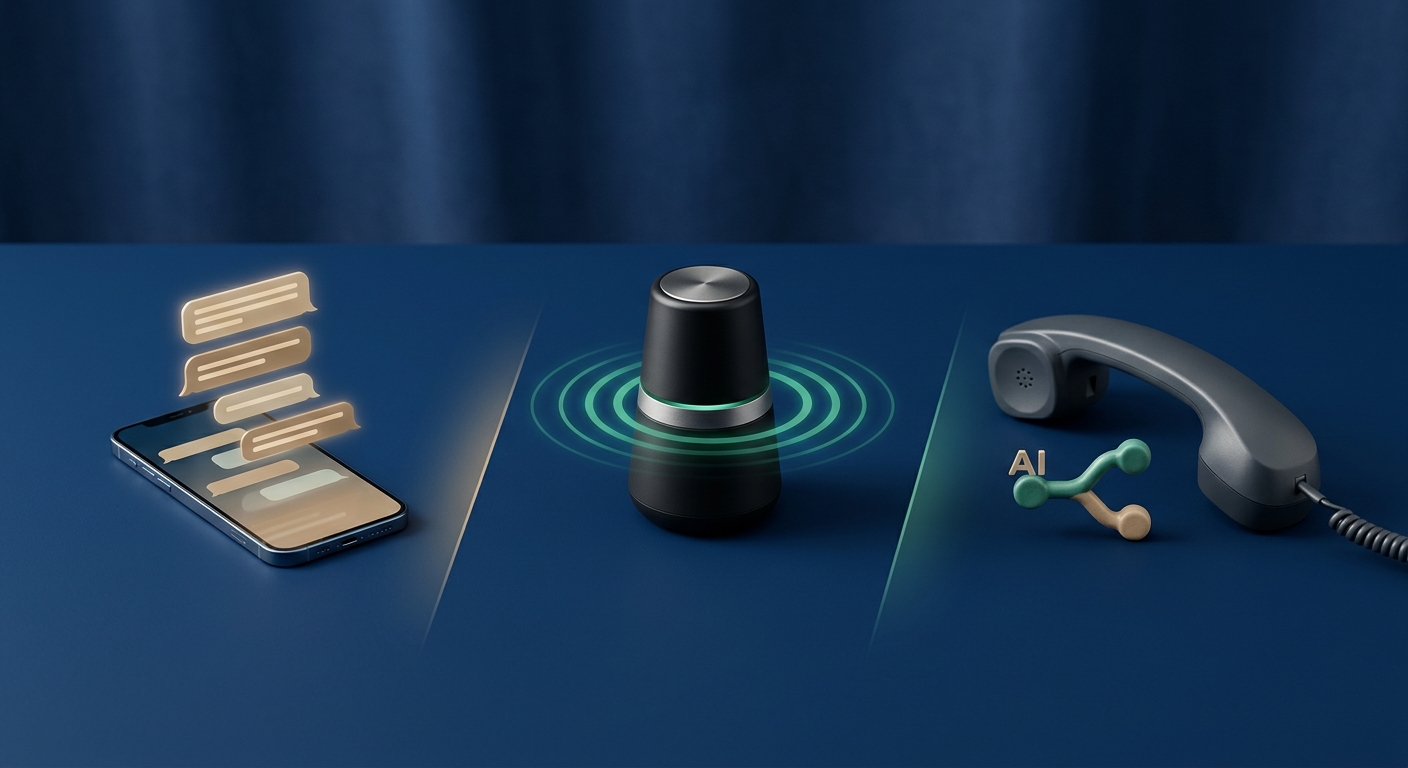
Best-fit setup options: SMS-first, voice AI, or human handoff
The right configuration depends on how your business actually runs, not on how technical you are. Three setups cover most cases, and the research describes each clearly.
SMS-first recovery is the lightest option. The system detects the missed call and sends an immediate text—a booking link, a callback option, or a short FAQ flow that answers common questions and nudges the caller toward scheduling (Numa, 2024). It works well when callers are comfortable texting and when most inquiries are simple and repeatable.
A voice AI receptionist answers the call live. It greets the caller, asks qualifying questions, and can schedule appointments directly into a calendar or CRM (RingCentral, 2024). This suits businesses where callers expect to talk to someone and where a real-time conversation closes the booking faster than a text exchange.
The hybrid workflow blends both with a human safety net. AI handles the first touch and basic triage, then escalates complex, urgent, or regulated cases to your staff (MyAIFrontDesk, 2024). For most regulated or high-value practices, this is the configuration that balances coverage with control.
Choosing among them comes down to three practical questions. How complex are your typical calls? How much discretion does the conversation require—are you discussing health, legal, or otherwise sensitive matters? And how does your team already book and route leads today? Match the setup to those realities and the rollout stays inside the workflows your staff already know. One principle holds across all three: the system should reduce front-desk interruptions and manual follow-up, not replace the people who handle judgment calls.
Where it works best by vertical
In healthcare, the strongest fit is front-desk overload and after-hours inquiries. AI can handle routine appointment booking while preserving a clear escalation path to staff for clinical or sensitive issues, which keeps both throughput and discretion intact (RingCentral, 2024).
In legal practices, a missed call often represents a high-value, time-sensitive intake opportunity. The main benefit is immediate qualification and callback capture, so a prospective client with an urgent matter reaches a responsive firm instead of a voicemail box (Voksha, 2024).
HVAC and home-services businesses are especially exposed to missed-call leakage. Calls come in during job-site work, in the evenings, and at peak demand—precisely when the team can't answer—which makes after-hours recovery particularly valuable (Voksha, 2024; MyAIFrontDesk, 2024).

ROI you can explain to the owner: recovered leads, bookings, and less busywork
The business case lives in three measurable categories: recovered leads, booked appointments, and reduced busywork. The vendor-reported figures point in a consistent direction, though they are vendor claims rather than independent benchmarks, so treat them as illustrative.
Retell AI reports a 93% reduction in missed calls, attributing the result to always-on handling and the ability to take multiple calls at once rather than dropping the overflow (Retell AI, 2024). Voksha claims that 60% of missed calls can be converted into booked appointments, with callbacks placed within ninety seconds (Voksha, 2024). The mechanism behind both numbers is the same: catch the caller fast, and more of them stay.
You don't have to take any vendor's word for it, because the metrics that prove ROI live in your own systems. Track four things: missed-call volume, recovered conversations, booked appointments created from those conversations, and time-to-response. Those four numbers tell you whether the workflow is paying for itself, and they don't depend on anyone's marketing claims.
Then connect the operational relief to the financial outcome. Fewer manual callbacks free your team for billable or revenue-generating work. Fewer front-desk interruptions mean the people in the room get better service. And consistent after-hours capture turns evenings and weekends from dead zones into booking windows—without adding a single hire.
A practical ROI measurement plan (what to log for 30 days)
Run a focused thirty-day log. For every missed call, record three data points: the missed-call count, whether a recovery message or live answer actually occurred, and the resulting outcome—booked, callback scheduled, or no response. This gives you a clean record of how many leaks the system is catching.
Then compare before and after for the same call windows. Look specifically at evenings and weekends, where the contrast is sharpest, and measure bookings created in those windows against the period before rollout. Thirty days is enough to see whether unanswered calls are turning into scheduled appointments, and the comparison gives you a number you can defend to anyone who signs the checks.
Build your missed-call recovery workflow
Book a Webspenser consultation and we'll map your missed-call flow—SMS, voice, or hybrid—define your qualification and handoff rules, and outline exactly how to turn unanswered calls into scheduled appointments, all without adding a technical team. You'll leave with a workflow designed around your current phone setup and the way your staff already books and routes leads. Schedule your Webspenser consultation today.

More from the blog
Keep reading and learning



The AI Edge Your Competitors Wish You Didn't Have
Most business owners will wait until AI feels "mainstream" before paying attention — by then, the gap will already be too wide to close. We send occasional, no-fluff newsletters that translate the latest AI tools and automation trends into plain English so you can act on them fast. Subscribe free and stay a step ahead.
Sharper — Understand AI well enough to make smart decisions for your business without needing a tech team
Faster — Spot and implement automation opportunities before your competitors even know they exist
More Competitive — Turn AI from an overwhelming buzzword into your biggest operational advantage