AI Receptionist for Small Business to Recover Lost Leads

AI Receptionist for Missed-Call Recovery That Books More
A caller dials your number, gets four rings and a voicemail prompt, and hangs up. Within ninety seconds, they've called the next name on the list. That's not a hypothetical—it's the default outcome of "voicemail and hope," and it happens most often after hours, when no one is at the front desk and the caller's need is urgent. The fix isn't longer hours or another hire. An AI receptionist for small business can run as a practical missed-call recovery system: missed call, instant text or AI voice, qualify intent, then book the appointment or route to a person. The goal is simple—stop losing the moment of intent.

What happens to leads when your team misses a call?
The failure mode is specific, not abstract. When a call goes unanswered, the caller rarely waits. In urgent local services, they hang up quickly and dial a competitor (DiscoveryDot, 2024). After hours, that behavior intensifies, because the person calling at 9 PM wants an answer now, not a callback during business hours three days from now.
Voicemail feels like a safety net, but it isn't one. It doesn't capture urgency, it doesn't capture booking details, and it doesn't create any obligation for the caller to wait for you. Most people simply don't leave a message. The inquiry—and the revenue behind it—disappears without a trace, and you never learn it existed.
The operational problem is that you've lost the moment of intent. That's the window where the caller is ready to act, and it closes fast. Manual follow-up later assumes the lead is still available and still interested, which is often a bad bet by the time someone on your team gets around to returning the call.
The recovery goal flips this. Instead of catching up later, you capture intent immediately and create one concrete next step: book the appointment, qualify the request, schedule a callback, or route the call to the right person (DiscoveryDot, 2024). The difference between those two approaches is the difference between a recovered lead and a lost one.
Why after-hours calls are the biggest leakage point
After-hours calls leak the most because urgency and absence collide. The caller has a real, time-sensitive need, and there's no one to meet it. Every minute of delay raises the odds they move on to whoever answers first (MyAIFrontDesk, 2024).
The fix isn't asking your front desk to stay later. It's response speed plus immediate capture. A system that responds the instant a call is missed covers the hours your team can't, without stretching your staff or adding payroll.
"Instant" follow-up as a practical rule of thumb
Recovery systems are consistently pitched as instant or within roughly ninety seconds (Voksha, 2024). Treat that as your working standard. You don't need an academic benchmark to act on the underlying logic.
The rule is plain: the longer the delay, the lower the chance the caller books with you instead of someone else (MyAIFrontDesk, 2024). Speed is the lever you can actually control, and after hours it's often the only one that matters.
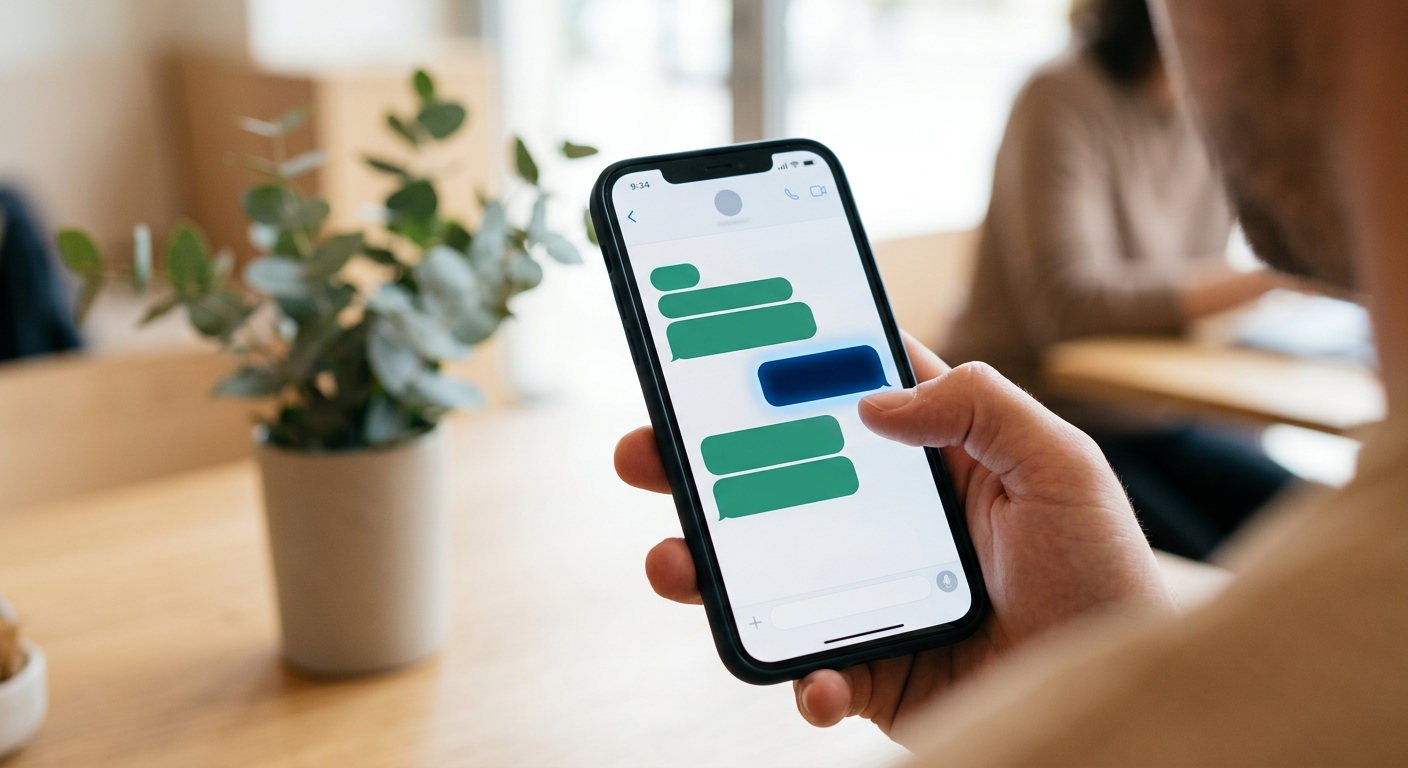
The missed-call recovery workflow (SMS-first + AI voice options)
The workflow is straightforward, and that's the point. A missed call triggers an instant text-back or a live AI voice answer. The system asks a few qualifying questions, then offers a booking link or captures a callback, and hands the conversation to a person when the situation calls for it (DiscoveryDot, 2024). Each step replaces guesswork with a defined action.
Two implementation patterns carry most of the load. The first is SMS-first recovery, where the system detects the missed call and sends a text with a booking link, a callback option, or a short set of FAQ-style prompts (Numa, 2024). The second is a voice AI receptionist that answers in real time and can schedule appointments directly into a calendar or CRM (RingCentral, 2024). A hybrid model layers both, using automation for the first touch and people for anything complex.
The value lives in what each step does for the business. Instant response retires "voicemail and hope." Qualification captures the caller's intent and details while they're still engaged. And the booking or callback step moves the inquiry measurably closer to an appointment instead of leaving it stranded in a voicemail box no one checks until morning.
SMS-first recovery: what the caller should get immediately
The text the caller receives should do one job: turn the missed connection into an action. That means a booking link they can tap, a callback option they can confirm, or a short prompt that answers their most common question and routes them forward (Numa, 2024). The message should feel like a real reply, not an automated brush-off.
For teams buried in follow-up, this is where the relief shows up. The system handles the first capture automatically, so no one has to remember to call back, dig up a number, or chase a lead that's already gone cold. The work that used to slip through the cracks now happens by default.
Voice AI receptionist: when a live call matters more
Some callers won't text, and some calls deserve a live answer. A voice AI receptionist picks up in real time, asks qualifying questions, and either books the appointment or routes the call to the right place (RingCentral, 2024). For callers who expect a human-paced conversation, that immediacy matters.
The hybrid approach keeps people in the loop where it counts. The AI handles the first touch and basic triage, then escalates higher-value, urgent, or regulated calls to staff (MyAIFrontDesk, 2024). You're not forcing full automation onto every interaction—you're reserving your team's time for the conversations that need it.
How an AI receptionist for small business recovers revenue
This is a revenue recovery system, not a novelty. The framing across the research is consistent: more booked appointments, always-on coverage, and reduced staffing pressure (RingCentral, 2024). The point isn't that the technology is clever—it's that it captures money you're currently leaving on the table.
Vendor-reported numbers give a sense of scale, and they should be read as reported claims rather than guaranteed outcomes. Retell AI claims its receptionist approach cuts missed calls by 93%, crediting unlimited concurrent call handling as the mechanism (Retell AI, 2024). Voksha claims it converts 60% of missed calls into booked appointments and calls back within ninety seconds (Voksha, 2024). Your mileage will depend on your call volume, your industry, and how you configure the workflow.
Why is performance like that plausible? Because the workflow attacks the exact point where leads die. Capturing the caller quickly and qualifying intent while they're still engaged converts far better than passive voicemail or a delayed callback. You're meeting the caller inside the moment of intent instead of hoping to find them after it's passed.
ROI you should measure without guessing
Measure outcomes tied directly to the workflow, not vanity metrics. Three numbers tell the story: your missed-call-to-booked-appointment rate, your time-to-first-response, and the volume of calls handled without manual triage. Track those before and after you deploy, and the impact becomes visible in dollars and hours.
A credibility note worth respecting: the available research leans on vendor pages, and independent benchmarking wasn't provided. So don't anchor your expectations to someone else's headline percentage. Anchor them to your own baseline and the specific changes you make—that's the only ROI figure you can actually defend.

Where this works best (healthcare, legal, HVAC/home services)
In healthcare, the strongest fit is after-hours inquiries and front-desk overload, with a clear human escalation path for clinical or sensitive matters (RingCentral, 2024). The system handles routine booking and intake while staff stay focused on the calls that require judgment.
In legal, missed calls often represent high-value, time-sensitive intake. Fast qualification and reliable callback capture mean a potential client gets a response before they retain someone else (Voksha, 2024).
HVAC and home services are especially exposed to leakage. Calls come in during job-site work, in the evenings, and at peak demand—exactly when no one can pick up. After-hours recovery is particularly valuable here, because the missed call is often a same-day or next-day job walking out the door (Voksha, 2024).

The "safe and useful" rollout: set expectations before you launch
Get clear on what you're aiming for operationally before you turn anything on. The target is instant capture, basic qualification, and booking or callback routing—with a defined human handoff path for the cases you want staffed. Naming that outcome up front keeps the rollout grounded in your goals instead of the vendor's pitch.
The setup turns on a few decisions. Choose SMS-first, voice-first, or a hybrid based on the kinds of calls you actually get. Then set escalation rules for complex, urgent, or regulated situations, so the right calls reach a person every time.
One caution protects your credibility and your investment. Avoid universal promises, because vendor claims vary widely and your context is your own. Measure the rollout against your baseline and your goals—not against a number from a marketing page. That discipline is how you separate a real result from a hopeful one.
What "human handoff" should look like
A handoff exists for a reason: complex, sensitive, or urgent cases that deserve a person. The objective isn't to let automation handle everything—it's to let automation handle the routine first touch so your team's attention goes where it's needed. In regulated fields, that line matters even more.
Continuity is what makes a handoff useful. The system should pass along the caller's intent and details, so staff pick up the conversation already informed. No one should have to start from zero or make the caller repeat themselves. That's the difference between a smooth transfer and a frustrated client.
Turn your missed calls into booked appointments
Request a Webspenser Missed-Call Recovery workflow assessment for your phone flow, covering SMS, voice, and your escalation rules, and you'll receive a clear map of where your calls are leaking and a practical AI receptionist for small business setup designed to convert after-hours inquiries into booked appointments you can measure against your own baseline.
See exactly where your missed calls are leaking
Book a free 30-minute call and walk away with a clear map of your phone flow gaps and a practical recovery setup built for your business.


More from the blog
Keep reading and learning



The AI Edge Your Competitors Wish You Didn't Have
Most business owners will wait until AI feels "mainstream" before paying attention — by then, the gap will already be too wide to close. We send occasional, no-fluff newsletters that translate the latest AI tools and automation trends into plain English so you can act on them fast. Subscribe free and stay a step ahead.
Sharper — Understand AI well enough to make smart decisions for your business without needing a tech team
Faster — Spot and implement automation opportunities before your competitors even know they exist
More Competitive — Turn AI from an overwhelming buzzword into your biggest operational advantage