After-Hours Leads: How an AI Receptionist Works the Night Shift
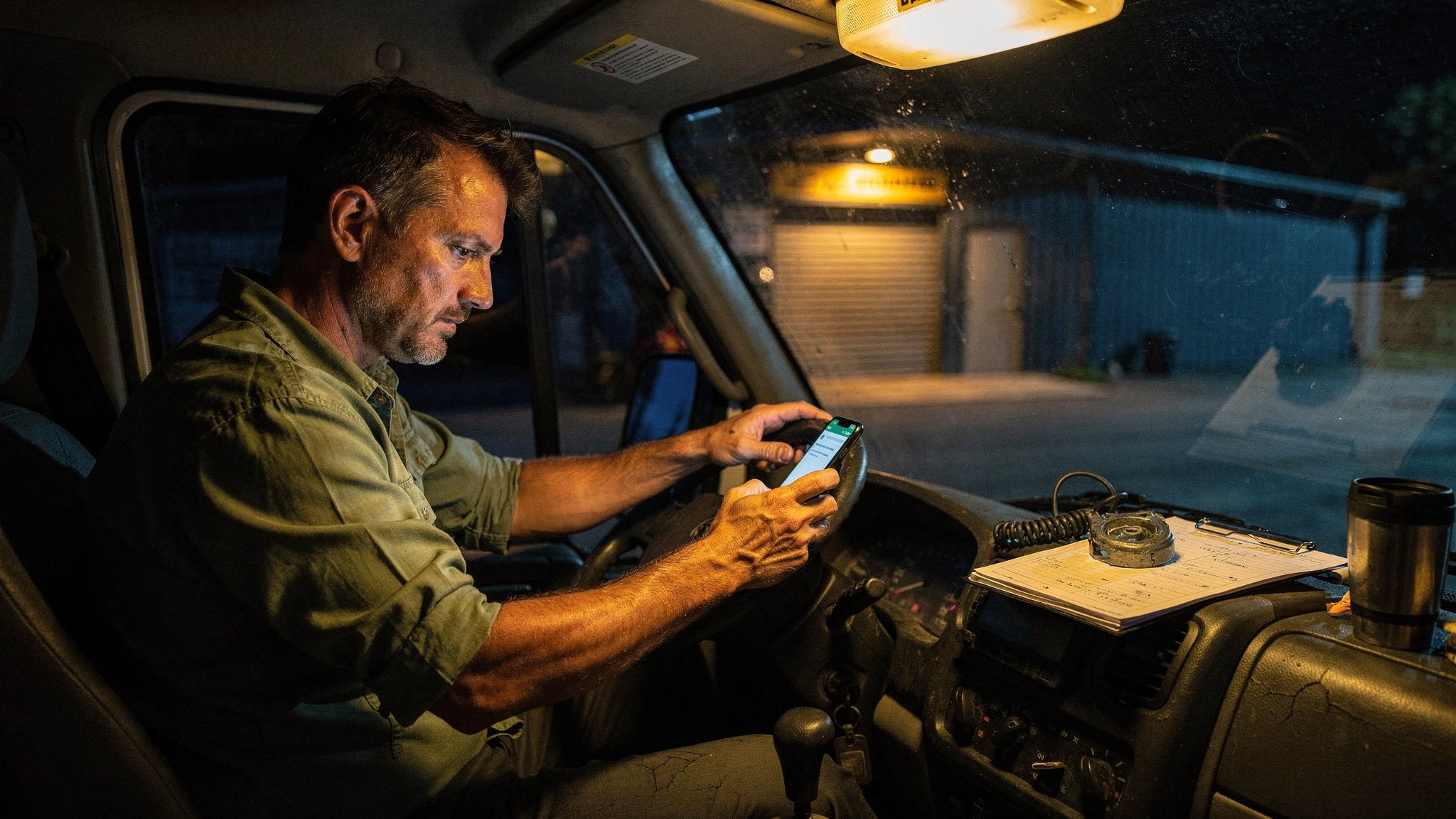
- Response-time decay after hours is the single biggest reason small businesses lose high-intent leads to competitors.
- Give night-shift AI agents a narrow mandate focused on instant response, basic qualification, and clean handoff.
- At night, aim for three outcomes: a booked appointment, a qualified lead, or escalation to a human.
- Always test your after-hours call path end-to-end to ensure the system never schedules unavailable calendar slots.
- Implement a two-failed-recognition rule so callers never get trapped in repetitive automated loops.
Calls and inquiries don't stop at 5 p.m. They just get harder to answer, and that delay quietly kills conversion. A form fill at 9 p.m. or a missed call on Saturday still carries real intent, but by Monday morning that lead has already texted three competitors.
This is exactly where an AI receptionist for small business earns its keep, not as a replacement for your team, but as after-hours speed-to-lead coverage. The goal is simple: respond instantly, qualify fast, and hand off cleanly so no evening caller is left waiting until morning.
Why after-hours leads behave differently
The problem is usually timing, not demand quality. During business hours, someone picks up in minutes. After close, that same inquiry can sit for many hours, and the longer a lead waits, the less likely it converts.
In Webspenser's view, this response-time decay is the single biggest reason after-hours demand leaks away, and it has nothing to do with the caller's intent. Someone reaching out at 8 p.m. often has strong purchase intent, they just caught you outside staffed hours.
The practical takeaway for owners who can't staff nights: you still need an immediate first response. If you don't reply, the caller cycles to whoever answers first, and that's rarely you the next morning.
What speed-to-lead means in plain terms
Speed-to-lead is the time between inbound intent (a missed call, text, or form fill) and a meaningful next step, meaning qualification or a booking. After hours, your process can't wait until you open. The caller's intent has already moved on by then, so the next step has to happen now or not at all.
What your night-shift AI should do (and what it shouldn't)
Give the agent a narrow mandate. Its job is first-line coverage: instant acknowledgment, quick qualification, capture of the right details, and booking or routing when possible. That's the whole assignment.
Here's the boundary. It should not act like a full sales closer or try to handle complex edge cases by default. Instead, it should escalate based on clear triggers. The strongest business case is reducing response delay at night while your people handle nuance during the day.

The three outcomes that protect revenue
At night, the system should aim for one of three outcomes: a booked slot, a qualified lead captured with a clear callback expectation, or an escalation to a human when urgency or value demands it. Each one beats voicemail. The caller gets a next step instead of silence, and silence is what sends them to a competitor.
The unique deployment choices for nights and weekends
Night coverage needs different design decisions than live answering. Set expectations for human follow-up, make sure the booking path actually works after hours, and tune the escalation threshold for genuine emergencies. Don't reuse your daytime success criteria wholesale.
Think of it as a workflow split. After-hours coverage needs a tight intake-to-next-step loop, not a full conversation engine. That also means tighter testing against real scenarios: your service areas, your scheduling windows, and what happens when booking simply isn't available.
The minimum coverage test you should run
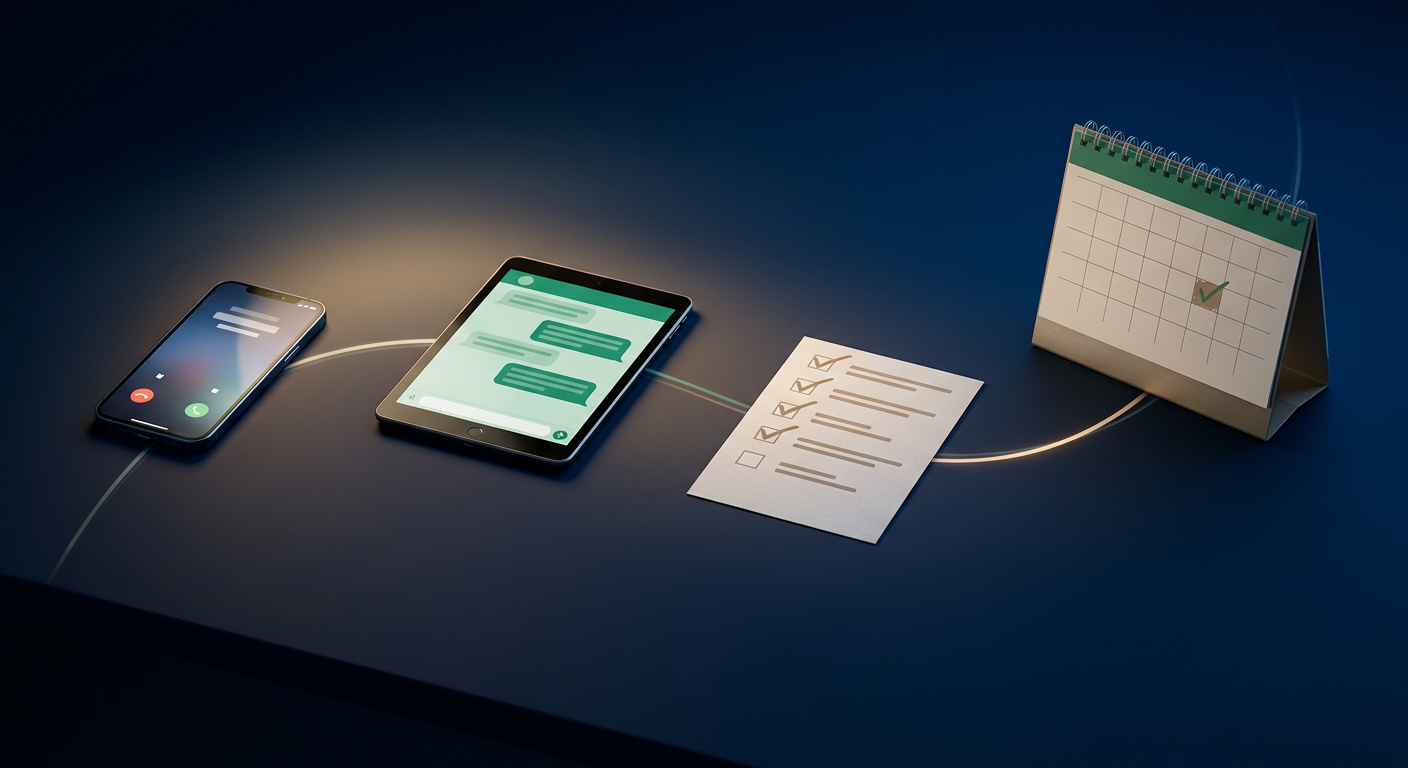
Before launch, run at least one realistic call path end to end: missed call, instant text-back or after-hours answer, lead capture, then booking or escalation. Confirm the system never promises availability it can't actually schedule. A booking the calendar can't honor is worse than no booking at all.
What improvement looks like when nights are automated
Measure the mechanics, not vanity metrics. Track response speed, qualification success, appointments booked from after-hours volume, and whether leads go quiet after the first touch. Those four tell you if the system is working.
A booking the calendar can't honor is worse than no booking at all.
Be honest about the evidence gap. Clean, universal conversion-lift figures for AI agents are thin. What holds up is the pattern behind response-time decay and missed-call loss, so expect improvement through faster response and better capture, not a magic multiplier. The useful comparison is a before-and-after delta on night and weekend inbound, especially whether demand that used to vanish now shows up in your CRM as booked or callback-scheduled work.
The numbers you should watch for after-hours
Track time-to-first-response for nights and weekends, then correlate it to bookings and qualified callbacks from those same sources. Also watch the failure reasons in the after-hours path: booking unavailable, unclear intent, no escalation. Named failures are fixable failures.
Common night-only pitfalls (and how to avoid them)
The main risk is pretending the after-hours agent can handle everything. That creates loops, misrouting, and frustration during the exact moments people are least patient. The second common failure shows up fast: a broken fallback when booking isn't available. If the system can't complete the next step, the lead needs a clean handoff with full context, not a dead end.
One operational rule: update the night workflow whenever your hours, service menu, or escalation rules change. Night coverage amplifies small instruction gaps, so a stale script does real damage.
A simple escalation rule of thumb
Use a two-failed-recognition approach, or something equivalent, so callers never get stuck in repetitive prompts. When the agent hands off, it should pass the captured details and the last user intent. Your on-call person should never start from scratch. If you want to know whether your data and workflows are ready to support this kind of handoff, the AI Systems Audit gives you a scored readiness picture in about five minutes.
After-hours automation works when you treat it as a speed-to-lead recovery system: instant response, structured qualification, and a clean handoff. Do that, and the caller who reaches you at 8 p.m. leaves with a clear next step instead of a wait until morning. For the full missed-call recovery system around this, including how to choose between SMS, voice, or a hybrid setup and how integrations and payback fit together, see our guide on building an AI receptionist that recovers missed calls and lost leads.
See If Your Workflows Are Ready for After-Hours AI
The audit scores your data, workflows, and integrations in five minutes so you know what to build before you go live.

More from the blog
Keep reading and learning

Every other Tuesday, one short email. A real moment from a small business, why people act that way, and the automation that handles it. Three minutes. No jargon, no hype.