AI Receptionist for Small Business: Avoid Robotic SMS
- Ground AI follow-ups with the Role + Context + Constraints framework to eliminate generic, templated responses.
- Anchor every SMS to a live trigger like the captured reason for the missed call.
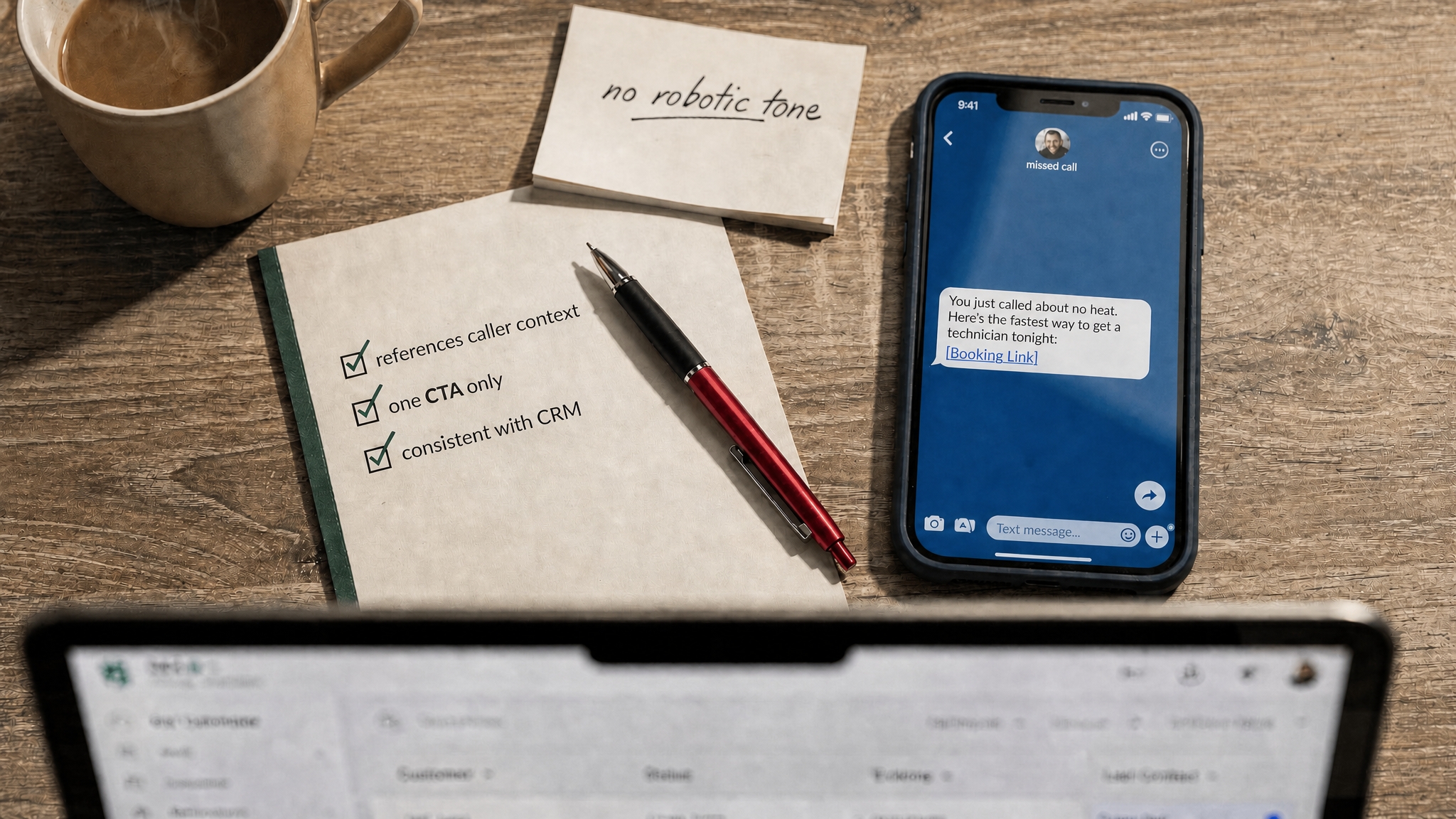
- Apply a 'one real detail' rule to ensure every follow-up feels written for that specific lead.
- Keep SMS replies concise, ideally under 80 words, with a single clear call to action.
- Implement a rigorous QA loop to check caller context and prevent conflicting CRM communication history.
A homeowner calls about a leaking pipe, hits voicemail, and hangs up. Seconds later your system fires back a text: "Thank you for reaching out! Our team is committed to providing exceptional service for all your needs." She reads it, feels nothing, and moves on. The message wasn't wrong. It was interchangeable, too polished, and disconnected from why she called. For an AI receptionist for small business, non-robotic follow-up isn't a talent problem. It's a prompting and editing problem, and both are fixable. This post gives you a framework and real examples you can apply to missed-call recovery texting today.
The specific reason AI follow-ups sound robotic (and how to fix it)
Robotic copy rarely comes from being automated. It comes from vagueness, interchangeable phrasing, and generic persuasion language. One sales messaging guide offers a blunt test: if the same message still works after you swap in a different company name, it's too generic (Sales Messaging Guide, 2024). Another recommends cutting "commercial" language, jargon, and clichés so the message reads like a person, not a template (Personalization Guide, 2024). For missed-call recovery, this matters more than usual. Your follow-up has to be fast, clear, and tied to what the caller actually asked, or it won't hold the intent they had when they dialed.
The three failure patterns to watch for
Too much polishing produces text that sounds like a template instead of a real reply to a specific call. Too little evidence leaves out the one detail from the caller's reason that proves you were paying attention. Too many asks stack multiple CTAs, slowing the reply and feeling pushy instead of helpful.

Use the "Role + Context + Constraints" prompt framework for clarity
Sales prompting guidance recommends grounding AI output with Role + Context + Constraints (Sales Prompting Guide, 2024). Translated to follow-up scripts, Role defines the sender. Set it as something like "You're texting from a local plumber's lead-capture line, replying to a missed call." Context carries the missed-call details you already captured at intake. Constraints are where you kill the robotic tone: cap the length, ban cliché openers, and force one clear objective per message (Sales Prompting Guide, 2024). Constraint-heavy prompts produce tighter, more human output because the model has nowhere to pad.
What to include in Context for missed-call recovery
Include the caller's intent in plain words, pulled straight from your intake ("no heat," "leak under sink"). Add one verification detail you can restate without asking for anything new, since new requests add friction. Name the single next step you're allowed to offer: a booking link, one qualifying question, or an escalation.
Anchor every follow-up to a live trigger (not a generic pitch)
The strongest follow-ups tie to a live trigger, an event or conversation already happening (Sales Email Guide, 2024). In recovery texting, the missed call is your trigger. Compare a robotic line, "We can help with your request," against a grounded one: "You just called about no heat. Here's the fastest way to get a technician out tonight: [link]." The second one references the trigger, respects the caller's time, and gives one obvious action. Keep it to a single objective so the lead knows exactly what to do next.
Examples of live triggers you can use
The caller's captured reason is your first trigger and belongs in the opening line. The second is speed itself: replying within seconds signals continuity, so say so plainly rather than dressing it up.
Edit pass rules that remove "AI voice" without making it vague
Run a short edit sequence on every draft. Tighten the tone, strip jargon and clichés, and match the directness and vocabulary your team actually uses (Sales Messaging Guide, 2024). Here's the counterintuitive part the research keeps returning to: human-sounding copy usually comes from more specificity, not more chatter (Sales Messaging Guide, 2024). A casual, chatty message is not automatically a human one.
Apply a "one real detail" rule: every follow-up must include at least one fact from the caller's context, so it can't read as mass-produced. That single detail does more work than any friendly adjective. It proves the message was written for this caller and no one else, which is exactly what a template can never do.
A simple edit checklist before you send
Cut everything that doesn't support the one objective, because a follow-up has to be skimmable. Replace "commercial" phrasing with plain, direct wording. Confirm you have only one active CTA and one reply path.
A casual, chatty message is not automatically a human one.
Proven length and timing guardrails for SMS follow-ups
Keep follow-up copy concise. Guidance lands around 50 to 150 words, with tighter recommendations under 80 words for fast outbound replies (Sales Email Guide, 2024). Space your messages out too. One guide suggests 3 to 5 business days between touches so the lead doesn't feel chased (Sales Email Guide, 2024). For a small service business, shorter and calmer wins, because perishable intent only survives if your text gets read and answered.
What "concise" should mean in practice
One clear ask, one reply path, a booking link or a single question. Skip the extra qualification paragraphs. Your CRM and call logs should carry the rest.
A measurable QA loop to protect conversion (not just tone)
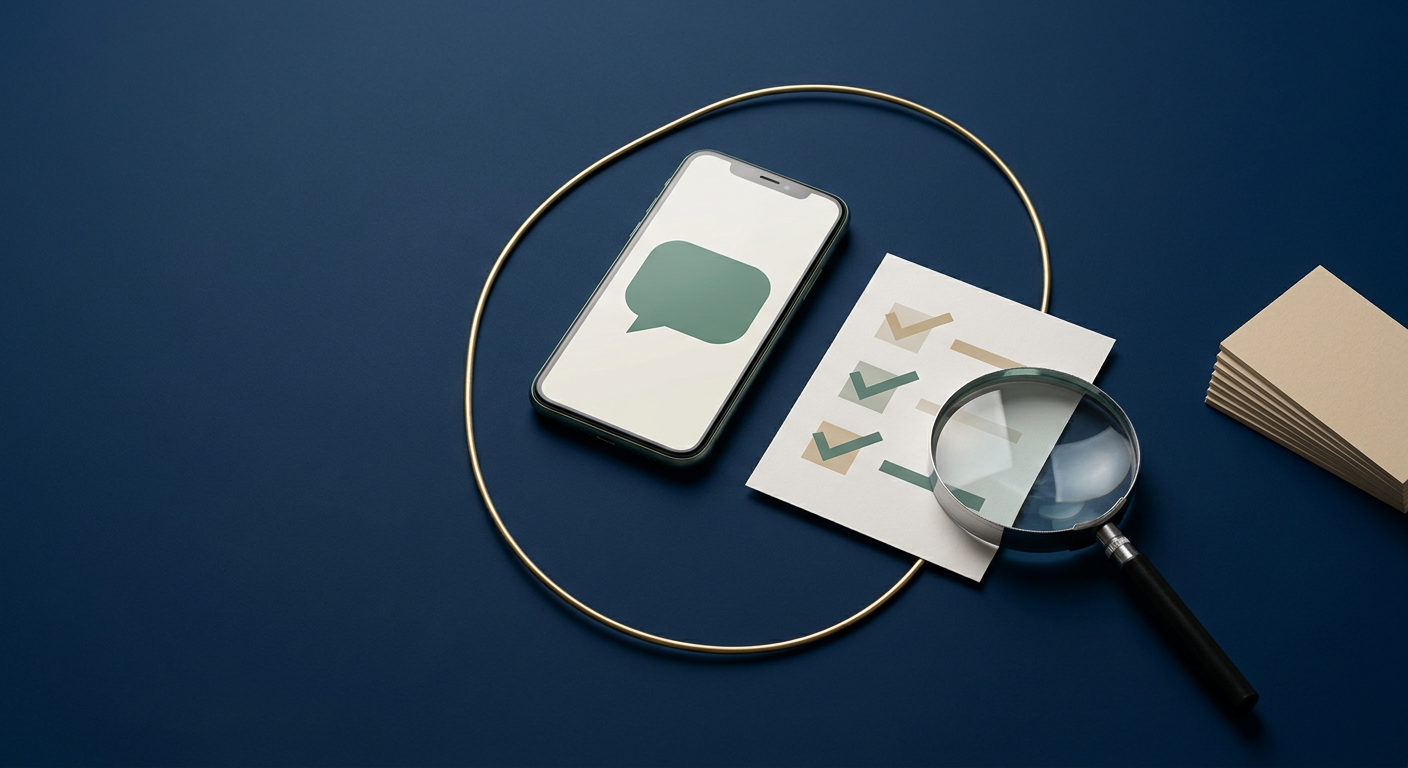
Review first-touch messages before they send. Context is thinner there and the risk of wrong or invented details is higher (Sales Email Guide, 2024). Check three things on every draft: it references the correct caller context, it uses exactly one CTA, and it doesn't contradict anything in the CRM conversation history. Then close the loop operationally. Route replies fast and keep CRM context attached to the lead, so later texts never contradict earlier ones (Personalization Guide, 2024).
What to test for in the first week
Watch whether reply rates climb when a message includes a specific, caller-derived detail. Watch whether "wrong next step" replies drop once you enforce one CTA and keep context consistent. If those numbers move, your scripts are working, and you've turned tone into something you can measure.
Script quality lives inside a larger recovery engine: the instant text-back, the lead record, the booking path. To see how the follow-up sequence fits the full missed-call workflow, read our complete guide to running an AI receptionist for small business.
Your Scripts Are One Piece of a Bigger System
Sixty minutes on your business. We'll map how calls, texts, and bookings actually move today, find where AI earns its place, and put the work in priority order — so you're not tuning prompts on a workflow that needs rebuilding first. The fee applies directly to your first project if you decide to move forward.

More from the blog
Keep reading and learning


Every other Tuesday, one short email. A real moment from a small business, why people act that way, and the automation that handles it. Three minutes. No jargon, no hype.